
Advantages of factoring over traditional bank loans
When applying for financing for a business, all aspects and conditions must be considered so that the method that best suits the company’s needs can be chosen. With the economic crisis , banks tightened conditions and made it difficult for companies to access credit , leading to the emergence of various alternatives to this type of financing that are increasingly being used. Traditionally, banks were the only option. However, their refusal to grant loans for a specific period of time has given rise to other options. These have already been tested by companies, which have proven to be completely valid financing methods.
Factoring is one of them (more information on factoring). Its popularity and recognition have grown exponentially, as evidenced by the record number of factoring transactions reached worldwide in 2014. The global volume mobilized through this financing method reached €2.3 trillion, a 6.3% increase compared to 2013, according to data provided by Factors Chain International.
Factoring vs. bank credit
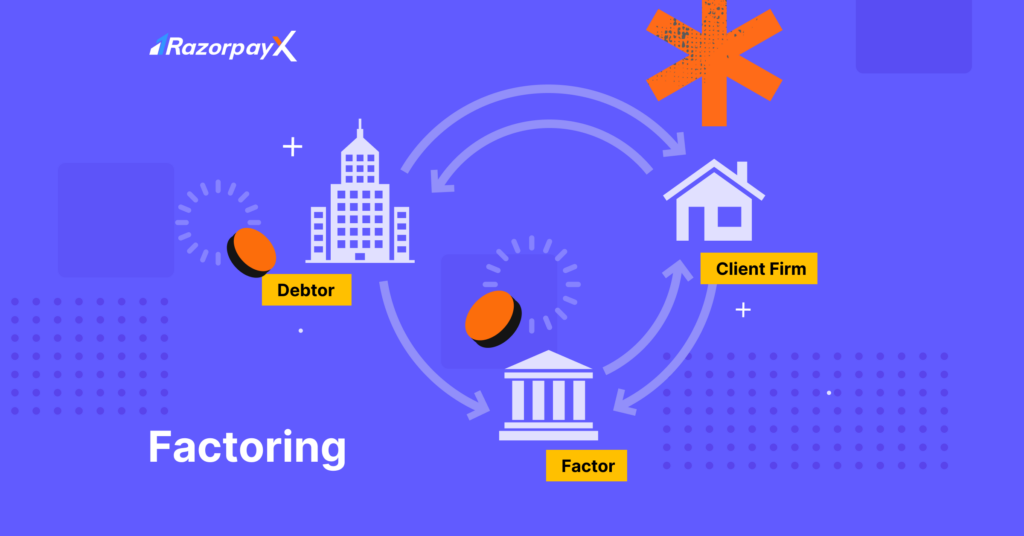
If a company has outstanding invoices due because the client is delaying payment, it is not necessary to apply for a loan to obtain liquidity. Factoring offers an alternative to this situation. In this case, a financial institution advances the company the money for these invoices, ensuring that it will receive payment on time, regardless of whether its clients are late with payments or even never pay what they owe. In addition to this important advantage, there are other factors that have favored the growth of this type of financing:
Factoring improves the company’s image
For both suppliers and potential customers, a company that has no debt, pays its expenses and pays its employees and suppliers on time, inspires trust and is perceived as solvent and reliable. This encourages suppliers to continue working with the company, and customers to continue purchasing its products or services. Thanks to the fact that the organization receives payment on time, it can also pay its suppliers in an orderly manner, generating the aforementioned sense of solvency.
Closing accounts on time
With a factoring service, companies can prepare their balance sheets and close their annual accounts on time, as they have all the money from their issued invoices and don’t have to wait for the client to pay. This way, the company increases its cash flow, eliminates financial debts, and avoids being included in the CIRBE (Central Banking Commission) or list of defaulters. Furthermore, it has efficient, statistically-accounting control of invoices. With a bank loan, this wouldn’t be possible, as the agreed-upon interest must always be taken into account. Furthermore, if non-payments continue, new debts are generated, in addition to the one already contracted with the bank when applying for the loan.
Speed in factoring
Without a doubt, one of the main advantages of factoring over bank loans is its immediacy. The factoring process is much faster, as the entity with which the factoring agreement is signed will advance the money immediately, when the company needs it, and only the issued invoices need to be submitted. However, in the case of banks, the process is much slower, as they require a series of documentation and procedures that delay the process. Ultimately, the money is not received when it is needed, but later.